
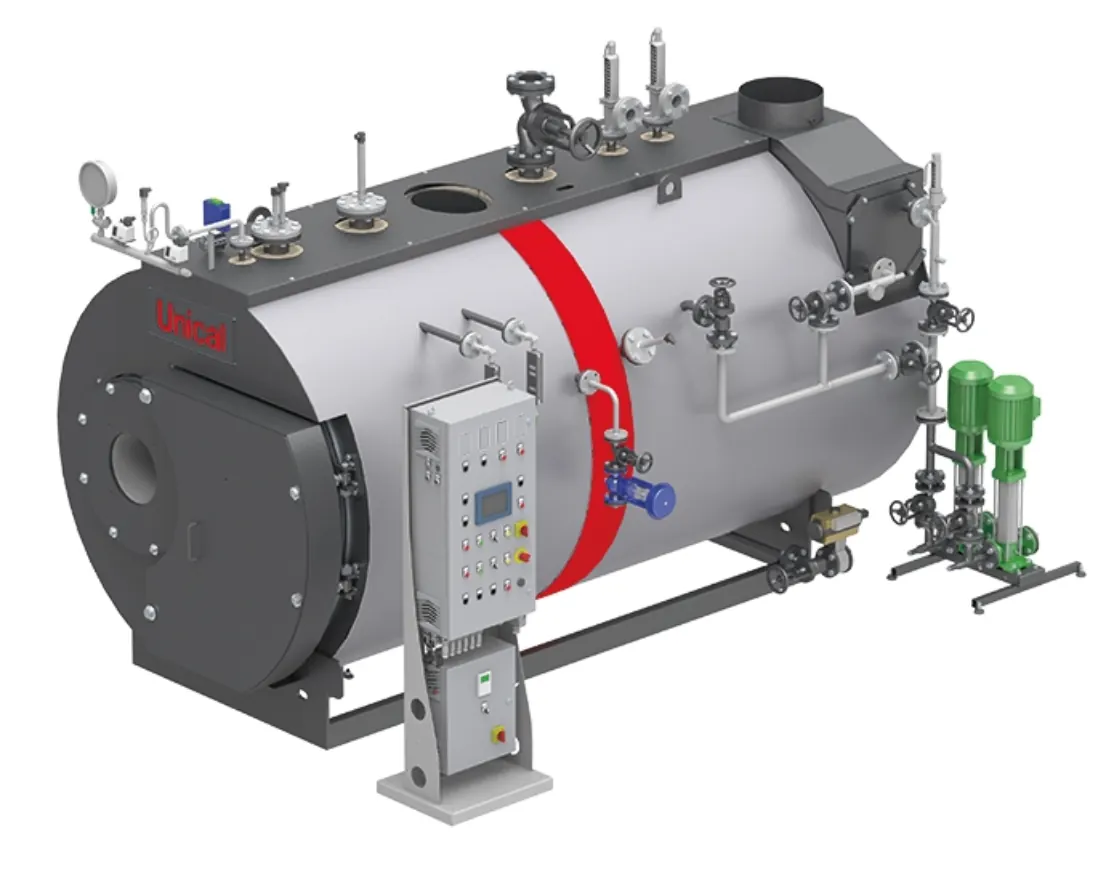
What a steam boiler does
A steam boiler turns water into steam using heat from a fuel or another energy source. The steam travels through a piping network to wherever it is needed: industrial processes, laundry and textile equipment, food and beverage production, sterilisation, heating, humidification and pharmaceutical applications. Capacity is set by how much steam you need. Operating pressure is set by the application.
Selecting the right boiler
A boiler that is too small will not meet peak demand. One that is too large costs more to buy and runs inefficiently. Before choosing, look at the required steam capacity, operating pressure and temperature, fuel availability, feedwater quality, daily operating hours, load variation, boiler room space, chimney and flue requirements, and any future expansion of production. A detailed technical evaluation at this stage improves the performance of the whole system for years.
Efficiency and energy savings
Fuel is one of the largest running costs of a steam plant. Savings come from economisers and heat recovery, condensate recovery, proper insulation, automatic combustion control, water treatment, regular maintenance and correctly sized pumps and accessories. Returning hot condensate to the boiler reduces both water consumption and the energy needed to heat fresh feedwater.
Water quality
Untreated or poorly treated water causes scale, corrosion, reduced heat transfer and higher fuel consumption. Water treatment protects the boiler and keeps its performance where it was on day one.
How Elec Qatar helps
We supply, install and maintain steam boilers in Qatar, including containerised steam plant for oil and gas sites, and we commission and service systems under annual contract.
Need help with this in Qatar?