
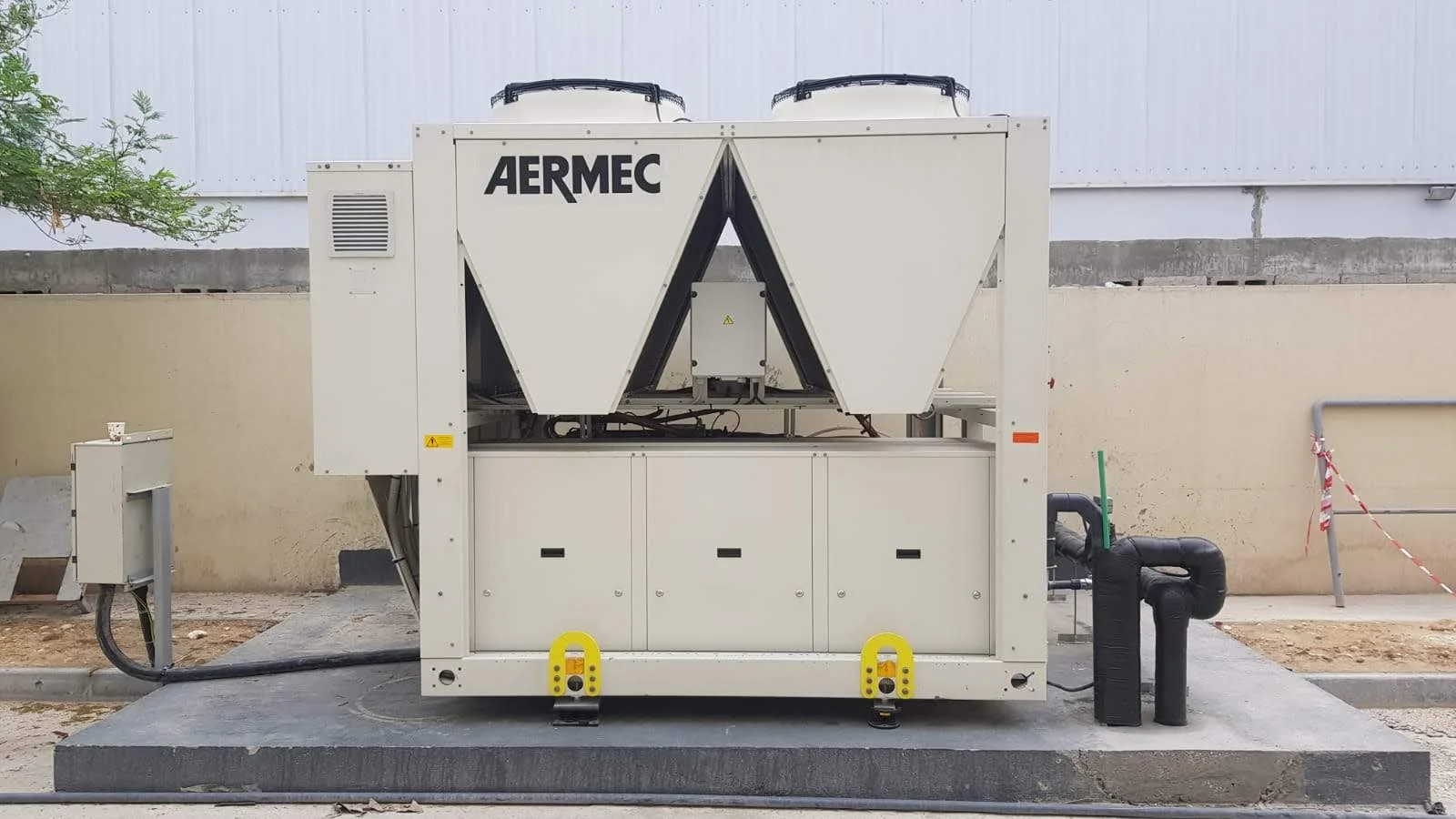
Keep the condenser coils clean
On an air cooled chiller the condenser coils reject heat to outdoor air. Dust, sand and fibres block the fins and force the compressors to work harder, raising power use and tripping high pressure alarms. Clean the coils with a method the manufacturer allows, and check the fans and guards. This is the single most valuable task before summer.
Check refrigerant, oil and electrical components
Low refrigerant charge, a worn compressor or a loose electrical connection each reduce capacity quietly. A service visit should record suction and discharge pressures, superheat and subcooling, oil level and condition, motor currents and contactor wear. Compare the figures with the commissioning record to see how the unit has aged.
Look after the water side
Chilled water pumps, strainers, valves and expansion vessels need regular inspection. Dirty strainers cut flow and make the chiller trip on freeze or low flow protection. Water treatment keeps scale and corrosion out of the evaporator. On water cooled plant, the cooling tower, its fill and its treatment programme also need a schedule.
Controls, setpoints and the building management system
Check that sensors read correctly, that chilled water setpoints and reset strategies are as designed, and that alarms reach the people who can act. A chiller running with the wrong setpoint or a stuck valve wastes energy all year without any visible fault.
Plan the shutdown and the spares
Book service before May, keep critical spares such as fan motors, contactors and sensors, and agree a response time with the maintenance contractor. A short, planned stop in spring is far cheaper than an emergency one in July.
Need help with this in Qatar?